- February 2, 2026
- elephynlabs@gmail.com
Restaurant Website Design in France and Spain: Get More Table Bookings Online in 2026 | Elephyn Labs
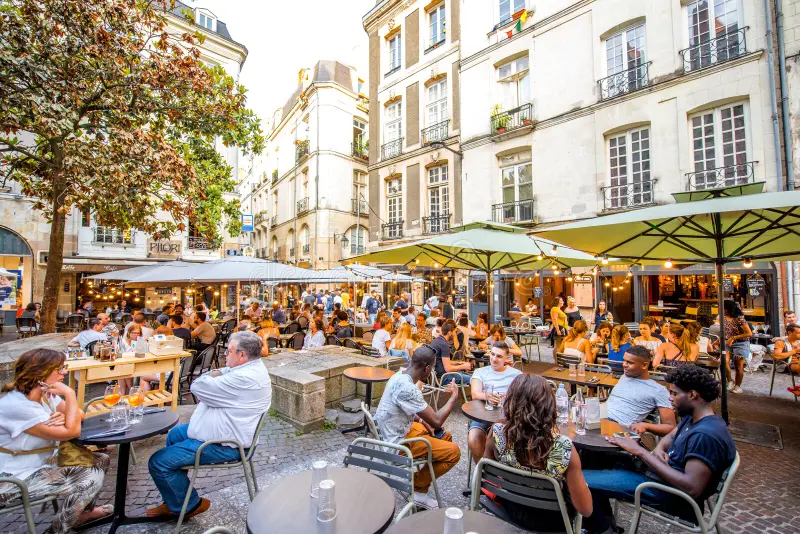
France and Spain are two of the world’s greatest dining destinations. From Michelin-starred restaurants in Paris to tapas bars in Barcelona, from bistros in Lyon to seaside paella restaurants in Valencia — the food culture of these two countries is world-renowned, and millions of diners search online every day for their next restaurant experience.
The question is: when those diners search Google for a restaurant like yours — in your city, your neighbourhood, your cuisine style — do they find you? And when they do find you, does your website inspire them to make a reservation immediately, or does it send them to the competitor with a better online presence?
In 2026, the vast majority of restaurant bookings in France and Spain — particularly for special occasions, tourist dining, and destination restaurants — are initiated online. A restaurant without a professional website with integrated online booking is not just missing a marketing opportunity; it is actively losing reservations every day to restaurants that have invested in their digital presence.
At Elephyn Labs, we build beautiful, high-performing restaurant websites for clients across France and Spain — designed to rank on Google, inspire immediate reservations, and showcase your food and atmosphere in the most compelling way possible. Here is what you need to know.
What Diners Expect From a Restaurant Website in France and Spain
Online Table Booking
This is the non-negotiable feature for any restaurant website in 2026. French and Spanish diners — and particularly the international tourists who represent a significant revenue stream for restaurants in Paris, Nice, Madrid, Barcelona, and the Balearics — expect to be able to book a table online instantly, without having to call during service hours. Integration with booking platforms such as TheFork (LaFourchette), OpenTable, or a custom booking system built directly into your website is essential.
High-Quality Food Photography
In the restaurant industry, your website photography is your menu’s first impression. Professionally photographed dishes, a beautifully presented dining room, and atmospheric images of your restaurant during service communicate far more than any written description. We strongly advise all restaurant clients to invest in a professional food photography session before their website launch — the return on this investment through increased bookings is significant.
Digital Menu
Your menu should be displayed in a beautiful, readable format directly on your website — not as a downloadable PDF that many mobile users will not bother to open. A well-designed digital menu, updated regularly to reflect seasonal changes, is both a conversion tool and an SEO asset. Menus with prices, allergen information, and vegetarian/vegan/gluten-free indicators are particularly valued by international diners and tourists.
Location and Transport Information
Particularly important for restaurants in Paris, Barcelona, Madrid, and other cities where tourists navigate by metro, bus, or on foot. A Google Maps embed, nearest metro or transport stops, parking information, and a clear address in the local format all reduce friction for first-time visitors and increase the likelihood of a booking converting into an actual visit.
Languages: French, Spanish, and English
For restaurants in major tourist destinations — Paris, Nice, Barcelona, Seville, the Costa del Sol — serving significant numbers of international diners, multilingual content is a significant competitive advantage. A restaurant website available in French or Spanish for local diners and in English for international tourists captures both audiences effectively. We build multilingual restaurant websites with proper hreflang implementation for clients across France and Spain.
Restaurant SEO in France and Spain
Ranking on Google for restaurant search terms in major French and Spanish cities requires location-specific optimisation, Google Business Profile management, and regular content publication. Key targets include cuisine-specific searches (“restaurant gastronomique Lyon,” “restaurante paella Valencia”), occasion-specific searches (“restaurant anniversaire Paris,” “restaurante romántico Madrid”), and area-specific searches (“meilleur restaurant Marais,” “mejor restaurante Barceloneta”).
Google Reviews are particularly important for restaurant SEO in both markets — French and Spanish diners heavily research reviews on Google and TripAdvisor before booking. A strategy for consistently generating new reviews from satisfied diners is a fundamental part of any restaurant’s digital marketing programme.
Frequently Asked Questions — Restaurant Website Design France and Spain
Q1: Should my restaurant website integrate with TheFork or OpenTable?
TheFork (LaFourchette) is the dominant restaurant booking platform in France and Spain and is widely used by local diners in both countries. OpenTable has a stronger presence with international tourists, particularly from the English-speaking world. For most restaurants in France and Spain, we recommend TheFork integration as the primary booking channel, with the option to add OpenTable for restaurants with a strong international tourist audience. Both can be integrated directly into your website so bookings happen seamlessly without visitors having to leave your site.
Q2: How important is Google My Business for a restaurant in France or Spain?
Critically important. A fully optimised Google Business Profile with up-to-date opening hours, menu link, booking link, regular photo updates, and a consistent flow of new Google Reviews is the foundation of local restaurant visibility in both markets. Restaurants without complete Google Business Profiles are significantly disadvantaged in local search results and on Google Maps — which is how the majority of diners find restaurants near their current location.
Q3: Should my French restaurant website be in French only, or also in English?
For restaurants primarily serving local French clients — neighbourhood bistros, local brasseries — French-only content is appropriate and authentic. For restaurants in tourist areas of Paris, the Riviera, Provence, or Bordeaux where international visitors represent a significant proportion of covers, a bilingual French/English website significantly improves your ability to attract and convert international diners. We build bilingual restaurant websites with a language toggle that preserves user experience while serving both audiences effectively.
Q4: How do I get my restaurant to appear in Google’s local pack results?
The Google local pack — the map and three-listing block that appears at the top of local restaurant search results — is determined by a combination of proximity to the searcher, Google Business Profile completeness and quality, review count and rating, and website SEO signals. Achieving consistent local pack visibility requires an optimised Google Business Profile, a technically sound website with local schema markup, and a strong and growing review profile. Our local SEO service manages all of these elements for restaurant clients across France and Spain.
Q5: Can you build a website for a restaurant group with multiple locations?
Yes. We build restaurant group websites that present a unified brand while allowing each individual location to have its own dedicated page with local menu variations, separate booking integrations, location-specific opening hours, and individual Google Maps embeds. This structure allows the group website to rank for search terms related to each individual location while maintaining brand consistency across the network.
Q6: How do I handle allergen information on my restaurant website?
Both France and Spain require restaurants to provide allergen information to diners. Displaying the 14 EU-regulated allergens for each dish on your digital menu is both a legal requirement and a practical necessity for attracting the growing segment of diners with dietary requirements. We build allergen filtering functionality into restaurant menus that allows diners to filter dishes by allergen — a feature that significantly improves the dining experience for guests with allergies or intolerances.
Q7: Should I display prices on my restaurant website?
Yes — in both France and Spain, displaying menu prices online is standard practice and expected by diners. A restaurant that hides its prices creates uncertainty and friction that often results in potential diners choosing a competitor whose pricing they can evaluate upfront. Transparent pricing also pre-qualifies your audience — a fine dining restaurant displaying its prices will attract diners who have consciously chosen to spend at that level, resulting in higher average spend and less price-sensitive clientele.
Q8: How can my restaurant get more Google Reviews in France and Spain?
The most effective approach is to make leaving a review as frictionless as possible. Display your Google Review QR code prominently on your bill presenter, at the exit, and on your receipts. Train your service team to mention reviews naturally at the end of a positive dining experience. Send a follow-up message via email or WhatsApp to diners who have made reservations online, thanking them for their visit and including a direct review link. Consistent, daily review generation over months builds a profile that significantly boosts your local search visibility.
Q9: Can you build a private dining or events section into my restaurant website?
Yes. Private dining, corporate events, wedding receptions, birthday parties, and wine tastings are high-value revenue streams for many restaurants in France and Spain. A dedicated private events section — with room capacity details, catering options, pricing guidance, and an event enquiry form — captures this valuable revenue stream directly from your website and ranks for event-specific search terms in your area.
Q10: How do I get started with my restaurant website?
Contact Elephyn Labs with your restaurant name, location, cuisine style, and what you want to achieve with your new website. We respond within 24 hours and can have a professionally designed restaurant website live within 15 to 20 business days of design approval.